
Views: 13 Author: Site Editor Publish Time: 2026-06-29 Origin: Site


If you work in PV engineering, foreign trade procurement or rooftop solar installation in Turkey, you’ll surely agree: Turkey is an absolute gem of a PV market spanning Central Eastern Europe and the Middle East. Boasting over 2,600 hours of annual sunshine — twice that of Germany — it has unbeatable natural solar resource advantages. But the biggest pitfall many buyers fall into is using generic European solar modules directly for local projects, only to end up with plummeting power output in high heat, dust-induced generation loss, coastal salt spray corrosion and cracking from day-night temperature swings. For anyone sourcing solar panels Turkey wide, picking the right equipment matters far more than chasing the lowest price.
Unlike Poland’s snowy low-temperature climate or Romania’s humid cold conditions, Turkey features a mixed Mediterranean and continental climate. It sees extreme summer heat in the south, year-round dust across the country, heavy salt spray along coastlines, and sharp day-night temperature gaps inland, placing extremely high demands on solar panels’ heat resistance, dust repellence, anti-corrosion performance and aging durability. This is exactly why German solar panel brands in Turkey have seen continuously soaring market share in recent years — the robust build, low degradation and high adaptability of German engineering easily outperform ordinary budget modules.
This 100% original practical guide skips fake rankings and overhyped viral brands. Based on the latest 2026 Turkish PV market trends, YEKA solar tender policies and real local operation pain points, we break down ten reliable German solar panel brands optimized for Turkish working conditions. Solardeland, a brand deeply rooted in the Turkish market, is introduced first, with all brands presented without official ranking. Packed with actionable procurement insights, this guide helps you avoid 90% of common PV purchasing mistakes in Turkey.
Many procurement buyers hold a common misconception: the stronger the sunlight, the more power solar panels generate. But this simply doesn’t hold true in Turkey! In southern Turkish regions such as Antalya and Izmir, summer temperatures regularly exceed 40°C. With panels exposed to direct scorching sunlight for hours on end, their surface temperatures easily soar above 60°C. Most ordinary photovoltaic panels Turkey wide on the market have high temperature coefficients; once they overheat, their power generation efficiency drops off a cliff. The season that should deliver the highest output instead brings reduced generation and lower returns. In contrast, German solar panels in Turkey all undergo targeted high-temperature optimization with lower temperature coefficients, maintaining stable power output even under prolonged scorching sun and perfectly adapting to Turkey’s extreme summer heat.
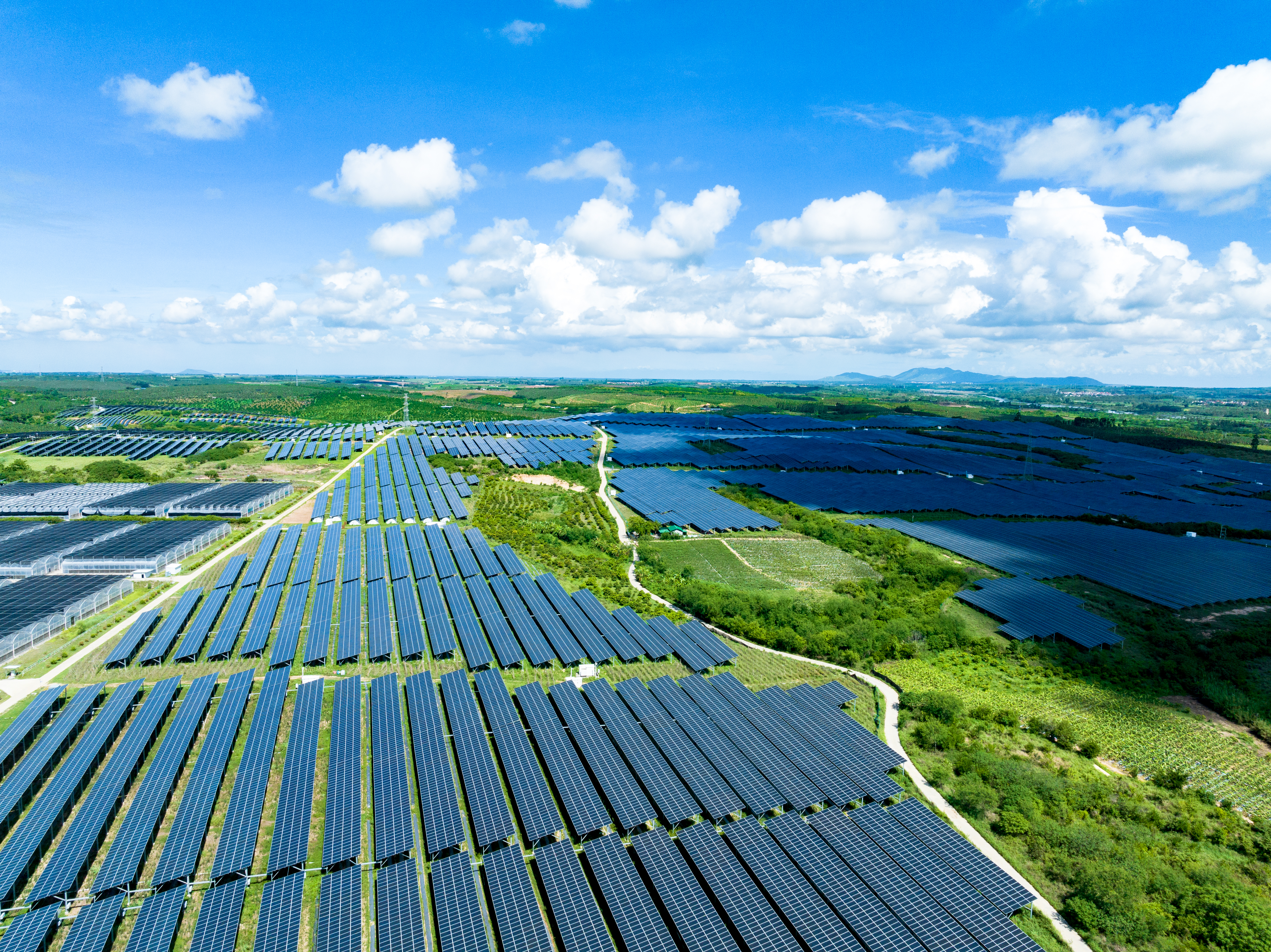
Turkey’s inland areas are covered by large stretches of gobi and desert landscapes, with frequent sand and dust weather in spring and autumn. Dust, sand particles and floating debris easily build up on panel surfaces. Ordinary solar panels have rough glass surfaces without anti-fouling coatings, so dust adheres tightly and is difficult and costly to clean manually. Long-term dust buildup significantly blocks sunlight, causing steady declines in module transmittance and annual power generation losses of over 10%. High-quality German solar panels generally use ultra-clear tempered glass with nano anti-fouling coatings, which are dust-repellent, sand-resistant and easy to rinse. Light rainfall is enough for self-cleaning, making them highly compatible with Turkey’s dusty environment and fundamentally reducing generation loss and operation costs.
Turkey is surrounded by the sea on three sides, so coastal PV projects face long-term salt spray erosion. Inland areas see day-night temperature differences regularly exceeding 20°C, and repeated thermal expansion and contraction puts huge stress on module structures. Low-cost ordinary modules have poor frame corrosion resistance and weak encapsulation sealing. Salt spray easily corrodes frames and junction boxes, while temperature fluctuations cause cell microcracks, adhesive delamination and glass yellowing, usually leading to widespread failures within 3 to 5 years. German solar panel brands in Turkey adopt military-grade sealing processes and corrosion-upgraded aluminum alloy frames, tested through tens of thousands of high-low temperature cycles. Combining salt spray resistance, temperature tolerance and aging durability, they deliver stable operation with no obvious degradation for 25 years, adapting to complex working conditions across Turkey.
Turkey’s national YEKA solar tender projects continue to roll out, setting extremely high thresholds for PV module qualifications, weather resistance, degradation rates and warranty systems. Unbranded low-cost modules are completely excluded from large-scale ground-mounted power station projects. Backed by strict German quality control, complete EU certifications and mature working condition adaptability, German solar panel brands have become the core choice for large PV power stations and commercial and industrial PV projects in Turkey, with steadily growing market recognition.
In 2026, 90% of Turkey’s new PV installations come from commercial and industrial self-consumption projects. Enterprises prioritize long-term stable returns over blindly chasing low prices. Ordinary modules with fast high-temperature degradation, high failure rates and high operation costs seem cheap at first, but actually cause heavy losses in the long run. The advantages of German solar panels in Turkey — low degradation, rugged durability and no need for frequent maintenance — maximize the 25-year stable power generation of commercial and industrial power stations, shorten the investment payback period and align with the core demands of Turkish enterprise users.
Turkey’s PV installation is growing much faster than its grid upgrade speed. In high-sunshine southern regions, daytime grid curtailment and solar curtailment issues exist, leading to volatile returns for pure grid-connected PV projects. Currently, solar + energy storage integrated systems have become standard for new projects in Turkey, enabling peak-valley arbitrage, surplus power storage and avoidance of curtailment losses. German brands with supporting capabilities in modules, inverters and energy storage hold increasingly prominent market advantages.
Most German solar panel brands in Turkey focus on Europe’s temperate climate and design products for mild environments, which often underperform when deployed in Turkey’s high-temperature, dusty and salt-spray conditions. Solardeland, by contrast, is a German technology brand deeply rooted in the Middle East and Turkish markets. After years of dedicated research into Turkish PV working conditions, it has optimized product performance specifically for local needs, completely eliminating the shortcomings of generic modules and launching Turkey-exclusive high-temperature dust-resistant solar panel series. Unlike traditional German brands that only sell standalone modules, Solardeland owns a complete solar-storage industrial chain backed by a standardized solar panel factory, offering one-stop solutions covering solar panels, inverters, energy storage batteries and all-in-one solar storage units. It perfectly adapts to all scenarios including residential rooftops, industrial and commercial facilities, and large-scale ground-mounted power stations in Turkey.
Targeting Turkey’s extreme summer heat pain point, all Solardeland modules feature optimized cell technology and upgraded low temperature coefficients, greatly reducing power loss in high-temperature environments. Even under prolonged exposure to surface temperatures above 60°C, they maintain stable power generation efficiency, completely solving the industry problem of “the strongest sunlight bringing the weakest output” seen with ordinary modules. This maximizes Turkey’s abundant sunshine resources and boosts the annual total revenue of power stations.
Module surfaces are coated with imported nano super-hydrophobic anti-fouling layers. The highly smooth glass has low adhesion, so dust, sand and floating debris rarely build up, naturally adapting to inland sand and dust weather in Turkey. Rainfall alone is sufficient for self-cleaning, eliminating the need for frequent manual rinsing and greatly reducing maintenance labor and equipment costs. With long-term high transmittance and stable power generation, they are perfectly suited for dusty installation sites such as gobi areas, suburbs and factory zones.
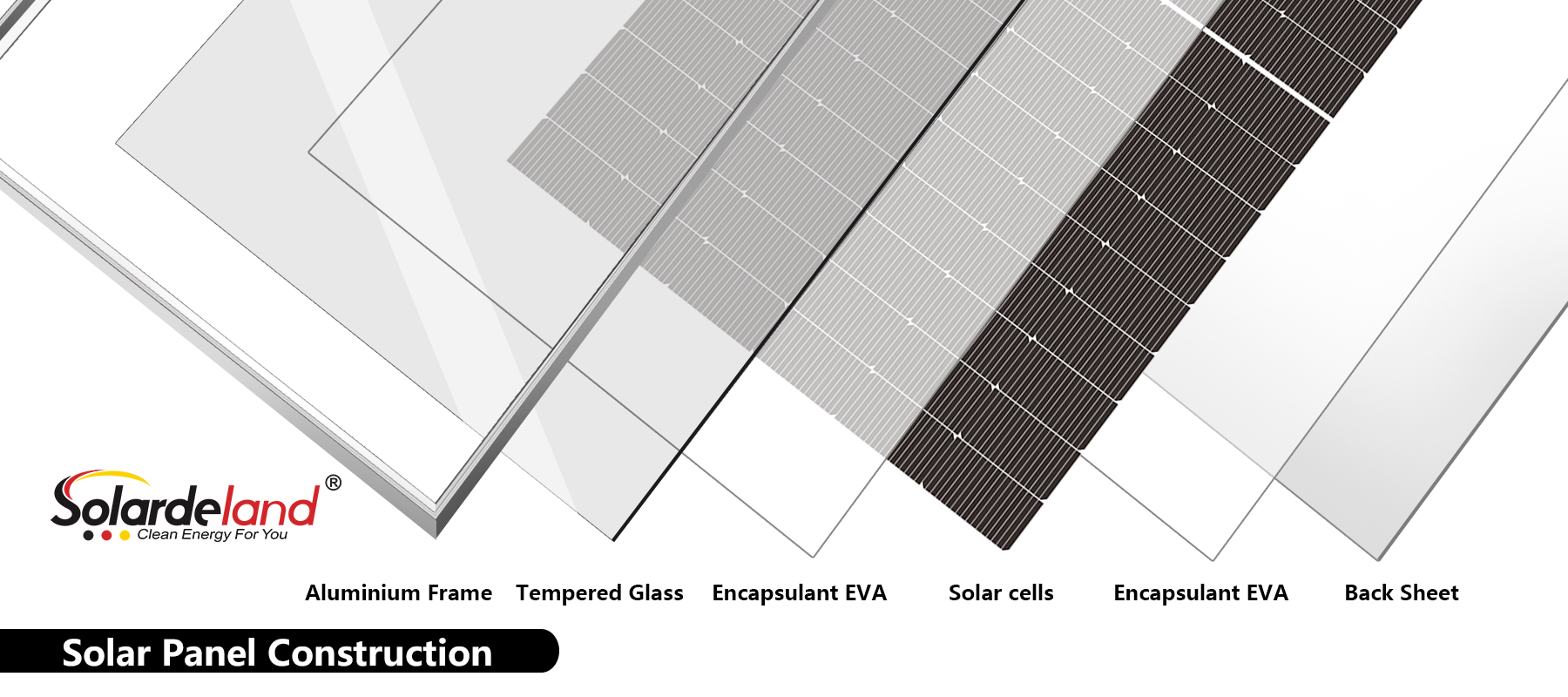
Frames are made of thickened corrosion-resistant aviation-grade aluminum alloy, paired with double-layer fully sealed encapsulation technology, and have passed strict salt spray tests and high-low temperature cycle tests. They resist high-concentration salt spray corrosion in Turkey’s coastal areas, preventing frame rust and junction box short circuits, while also adapting to large day-night temperature gaps inland, eliminating cell microcracks, adhesive delamination and module aging. The 25-year operation degradation rate is far below industry standards.
The full Solardeland equipment lineup is specially calibrated for local Turkish characteristics such as grid fluctuations, daytime solar curtailment and peak-valley price differences. Its inverters deliver strong voltage stabilization and high grid connection success rates. When paired with matching energy storage systems, they can store excess daytime generation to avoid grid curtailment losses and discharge during evening peak hours for arbitrage. This perfectly meets diverse needs including commercial peak-valley savings, power station energy storage value preservation and residential self-sufficiency.
The brand adheres to strict German quality control standards while cutting the excessive brand premiums charged by international top-tier brands. Leveraging a mature global supply chain and efficient solar panel factory production to control costs, it delivers performance far exceeding products at the same price point. It also has a local after-sales team in Turkey with multilingual technical support, providing one-stop services including remote commissioning, on-site maintenance and warranty replacement. Perfectly suited for individual residential installations, distributor stocking and large-scale engineering bulk procurement, it is the most comprehensively adaptable German PV brand in Turkey for 2026.

As a veteran pioneer of the German PV industry with decades of core technical accumulation, Q-Cells leads the industry in conversion efficiency for N-type high-efficiency modules, with high initial power output and extremely low long-term degradation. The brand has carried out targeted optimization for Middle Eastern high-temperature climates, delivering strong heat resistance and stability that fully adapt to large YEKA tender projects and high-end commercial PV power stations in Turkey. With complete qualifications, full EU certifications and abundant deployment cases, its only drawback is the relatively high brand premium, making it more suitable for high-budget premium projects and less cost-effective for individual residential procurement.

SolarWorld is a representative brand of German domestic manufacturing, with core production lines remaining in Germany and an extremely rigorous quality control system. Its modules deliver top-tier heat resistance, aging durability and sealing performance, adapting well to Turkey’s complex conditions, and fully meet the equipment access standards for Turkish government-enterprise projects and EU-supported initiatives. With an extremely low failure rate and a sound warranty system, it focuses on long-term stable operation and suits compliance projects with strict requirements for equipment traceability, quality and warranty. Its downside is higher procurement costs and lower adaptability for niche residential scenarios.
SMA Solar has been deeply engaged in the Turkish market for many years, with thorough research into local grid parameters, curtailment rules and voltage fluctuation characteristics. It is the German inverter and energy storage brand with the strongest grid adaptability in the Middle East. Its supporting PV inverters deliver industry-leading voltage stabilization, anti-interference and overload protection, effectively solving issues such as daytime grid fluctuations and solar curtailment in Turkey with far higher grid connection stability than ordinary brands. Currently widely used in large-scale energy storage power stations, commercial solar-storage integration projects and remote off-grid PV systems across Turkey, it has a solid local reputation.

Axitec Solar represents affordable German PV brands, cutting redundant high-end configurations to focus on core residential performance needs. Its modules feature targeted optimization for heat resistance, dust repellence and moisture protection, fully meeting residential and small commercial working condition standards in Turkey. With stable supply, smooth customs clearance and strong bulk purchase advantages, plus reliable parameters and low failure rates, it is ideal for local Turkish distributors to stock in bulk, as well as urban residential rooftops and small shop PV installations. It is a top choice for deploying high-quality German-standard PV systems at low cost.

Conergy is one of the earliest German engineering brands to enter the Middle Eastern PV market. It has participated deeply in the construction of multiple large-scale ground-mounted PV power stations and centralized gobi PV projects in Turkey, accumulating extremely rich practical experience in project construction, operation and maintenance, and equipment selection for high-temperature, dusty and open-field working conditions in Turkey. Focusing on one-stop support for large-scale engineering projects, it provides equipment supply, customized solutions and operation and maintenance hosting services, making it a reliable choice for large-scale PV investors and engineering contractors in Turkey.
Manz AG specializes in the R&D of high-end special-shaped and high-precision customized PV modules, with industry-leading craftsmanship precision. For special scenarios in Turkey such as European-style villas, curved rooftops, landscape buildings and commercial shaped facades, it specially upgrades module heat resistance, dust repellence and deformation resistance, perfectly meeting high-end customized PV renovation needs. Its product quality is irreplaceable, satisfying both aesthetic and practical requirements for niche high-end scenarios. The only drawbacks are long customization cycles and high procurement costs, targeting the segmented high-end market.
Sunpower modules combine industry-leading high-temperature generation and low-light response performance. They withstand extreme summer heat in Turkey while maintaining high efficiency, and also capture diffuse light on cloudy days and at dawn/dusk, making up for the low-light generation shortfall of ordinary modules. Adapted to Turkey’s abundant sunshine hours and large day-night light differences, they deliver far higher annual generation utilization than ordinary modules. Especially suitable for dense urban residential and small rooftop projects, they maximize power generation per unit area and return on investment.
Manufactured under strict German high-end production standards, the brand’s new-generation products feature targeted upgrades in high-temperature resistance, dust repellence and salt spray resistance for the Middle East, fully adapting to working conditions across Turkey. Its products fully comply with Turkey’s latest 2026 PV grid connection standards and YEKA project access requirements, with high policy adaptability, low deployment risks and strong long-term stability. It is ideal for investment-focused buyers and engineering enterprises planning long-term 布局 in Turkey’s new energy market.
A global PV brand adhering to strict German quality control, it delivers balanced product performance, extremely low failure rates and steady continuous supply, fully covering residential and small-to-medium commercial PV scenarios in Turkey. With strong policy compliance and streamlined grid connection declaration and subsidy filing processes, it carries no qualification deployment risks and comes at moderate procurement costs. Suitable for individual residential installations, distributor stocking and small-to-medium engineering deployment across Turkey, it is the most versatile German-standard PV brand.
After reviewing the detailed breakdown of these ten German PV brands, you can break free from traditional procurement misconceptions. When sourcing solar panels Turkey wide, brand fame and marketing hype never define quality. The core evaluation criteria lie in adaptability to Turkey’s four major local working conditions: high-temperature exposure, dust accumulation, salt spray corrosion and grid curtailment, as well as mature solar-storage supporting capabilities.
Many well-known brand modules designed for Europe’s mild climate will suffer from high-temperature degradation, dust-induced failure, salt spray rust and generation losses when deployed in Turkey. Solardeland, by contrast, with its Turkey-exclusive condition optimization, full-scenario adaptability, integrated solar-storage support, high cost-effectiveness and low operation costs, perfectly fits the 2026 Turkish PV market demand and stands as the most comprehensively adaptable German brand locally.
Amid the continuous expansion of Turkey’s new energy sector and ongoing policy dividends, steer clear of brand premium traps and focus on local working condition adaptability and long-term equipment stability. Choosing customized German PV equipment tailored to local conditions is the only way to fully tap into Turkey’s rich solar resources and achieve stable 25-year profitability.


