
Views: 15 Author: Site Editor Publish Time: 2026-07-07 Origin: Site


If you are engaged in European PV foreign trade, solar installation engineering, or power station investment, you must have a common misunderstanding: Northern Europe is too cold and dim for solar power development. However, the real Sweden solar panel market completely breaks this stereotype! As a benchmark country for new energy in Northern Europe, Sweden relies on strict carbon neutrality goals, stable new energy subsidies, and a mature grid connection system. Its PV installation capacity has skyrocketed year by year, and solar projects are widely deployed even in high-latitude frigid regions.
Nevertheless, countless buyers have encountered serious failures. Most importers directly adopt universal European solar modules designed for Western and Southern Europe, which always underperform after being installed in Sweden. Common problems include emergency shutdowns at -30°C extreme cold, frame deformation and cracking under heavy snow, nearly zero power generation in long-term cloudy and low-light autumn and winter, and module delamination caused by repeated freeze-thaw cycles. Unlike the high-temperature and dusty climate in the Middle East and the snowy temperate climate in Eastern Europe, Sweden features three extreme working conditions: high-latitude low light, ultra-low temperature freeze-thaw, and ultra-long snow cover periods, which set extremely high standards for the cold resistance, snow pressure resistance, low-light power generation, and aging resistance of solar panels in Sweden.
This is why German solar panel brands in Sweden have dominated the mid-to-high-end PV market in recent years. The low-temperature stability, precision packaging technology, and local condition adaptability of German-made PV modules are far superior to ordinary low-cost panels. This 100% original and practical SEO guide skips fake rankings and overhyped marketing gimmicks. Combined with Sweden’s latest 2026 PV policy updates, four major electricity price zone differences, and real operation data from Arctic Circle power stations, we have sorted out the top 10 reliable German solar panels perfectly adapted to Swedish working conditions. Solardeland, a brand deeply rooted in the Northern European market, is introduced first with no official ranking. This in-depth purchasing guide helps you avoid mainstream PV pitfalls and select ideal modules for residential, commercial, and Arctic-scale solar projects in Sweden.
Sweden spans high-latitude regions from 55°N to 70°N, with huge climate differences between the north and south. The Arctic Circle area in northern Sweden faces regular extreme cold in winter, with the lowest temperature dropping to -30°C or even lower. Most universal civilian photovoltaic panels on the market only have a low-temperature tolerance limit of -20°C. When deployed in northern Sweden, they are prone to brittle cell cracks, circuit shrinkage and open circuits, and runaway power degradation. Most ordinary residential solar panels Sweden stop working completely in deep winter, resulting in huge annual power generation losses. In contrast, professional German solar panel brands undergo professional polar low-temperature testing, featuring lower temperature resistance and enhanced material toughness. They maintain stable circuit operation and consistent power output even in long-term ultra-low-temperature environments, fully adapting to all frigid working conditions across Sweden.
Unlike Poland’s short snow season, Sweden has an ultra-long snow cover period of 5 to 6 months every year. Rooftop and ground-mounted solar panels in Sweden bear continuous high-intensity static snow pressure for half a year. Ordinary PV modules adopt thin aluminum alloy frames and simple packaging technology with extremely low snow load resistance. Long-term snow compression easily causes frame bending, glass deformation, and hidden cell cracks. When snow melts in spring, meltwater penetrates the module interior through gaps, causing circuit oxidation, short circuits, and sharp power attenuation, leading to complete scrapping within about 3 years. Standard German solar panels are equipped with thickened high-strength frames and double-layer fully sealed technology, with snow pressure resistance parameters far exceeding industry standards. Reliably produced by professional solar panel factory facilities, German modules eliminate snow-induced damage and water leakage from the source, perfectly adapting to Sweden’s long snow season.
A common solar misconception is that power generation only depends on strong direct sunlight — this theory is completely invalid in Sweden! Due to its high-latitude geographical location, Sweden receives limited direct sunlight all year round. Autumn and winter are dominated by overcast, cloudy, and diffused low-light conditions, while northern regions experience short polar night periods. Ordinary modules designed for Southern European strong-light environments have slow startup speed and extremely low conversion efficiency under low light, resulting in an annual power generation utilization rate of less than 60%. In comparison, premium German solar panel brands in Sweden are optimized with upgraded low-light photoelectric conversion systems, delivering strong capture capacity for diffused and weak light. These high-performance German solar panels consistently generate power on cloudy and snowy days, maximizing Sweden’s limited solar resources and making up for winter power generation shortages.
Spring and autumn in Sweden feature extreme day-night temperature differences, with snow melting and warming in the daytime and freezing at night, forming high-frequency freeze-thaw cycles all year round. Ordinary modules use low-toughness packaging films and weak sealing structures. Repeated thermal expansion and contraction cause film delamination, glass yellowing, and sealing failure. Continuous water vapor penetration seriously accelerates module aging and power attenuation. Qualified German solar panels adopt military-grade low-temperature flexible packaging materials, tested through tens of thousands of freeze-thaw cycles. With excellent structural stability against Sweden’s frequent temperature fluctuations, they maintain ultra-low degradation rates during 25 years of long-term operation.
2026 marks a critical turning point for Sweden’s solar policies. The original micro-generation subsidy of 0.6 SEK per kWh has been officially canceled, and the solar equipment tax deduction has been reduced from 20% to 15%. In contrast, energy storage batteries still enjoy a high 50% tax deduction. After the policy adjustment, Swedish users no longer blindly pursue low-cost modules. Instead, they prefer high-quality German solar panels in Sweden with low degradation, long service life, and solar-storage integration compatibility, avoiding extended payback periods caused by module failures and insufficient power generation.
Sweden is divided into four independent electricity price zones. The PV power generation revenue in southern regions such as Malmö is 3 times that of northern Luleå. Low-quality ordinary modules feature unstable power output and rapid degradation, wasting huge profit potential in high-value electricity zones. By contrast, condition-optimized German solar panels deliver stable power output and high annual utilization rates, fully capturing electricity price dividends and maximizing the return on investment of Swedish PV projects.
Remote northern Sweden has weak grid bearing capacity, and light intensity fluctuations easily cause grid voltage instability, leading to grid connection difficulties and volatile power output for pure grid-connected PV systems. Benefiting from generous energy storage subsidies, solar energy Sweden projects in 2026 generally adopt solar-storage integrated systems. German solar panel brands with complete module, inverter, and energy storage supporting capabilities hold absolute market advantages in the Swedish new energy market.

Most mainstream German PV brands focus on temperate climates in Western and Southern Europe, with products designed for normal temperatures and strong sunlight. These universal modules suffer severe performance degradation when facing Sweden’s extreme cold, low light, and heavy snow conditions. Solardeland is a professional German technology brand deeply rooted in Northern Europe and focused on the Swedishsolar panel market. After years of targeted research on differentiated climate conditions across Sweden, it has completely abandoned generic module designs and launched the exclusive Sweden polar cold-resistant and low-light solar panel series. Different from traditional German brands that only sell single modules, Solardeland owns a complete solar-storage industrial chain supported by a standardized solar panel factory, providing one-stop solutions including solar panels, low-temperature dedicated inverters, energy storage batteries, and all-in-one solar storage units. It perfectly adapts to residential rooftop systems, industrial and commercial projects, and large-scale ground power stations in the Swedish Arctic Circle.
Targeting the extreme cold pain points of the Swedish Arctic Circle, all Solardeland solar panels in Sweden are upgraded with special low-temperature cells and flexible packaging materials, achieving an ultra-low temperature tolerance of -35°C, far exceeding industry standards. Even during prolonged extreme cold in Swedish deep winter, the module circuit remains stable without cracks, open circuits, or shutdown failures. It completely solves the industry problem of zero winter power generation and halved annual revenue for ordinary modules, maximizing low-light power generation potential in cold seasons.
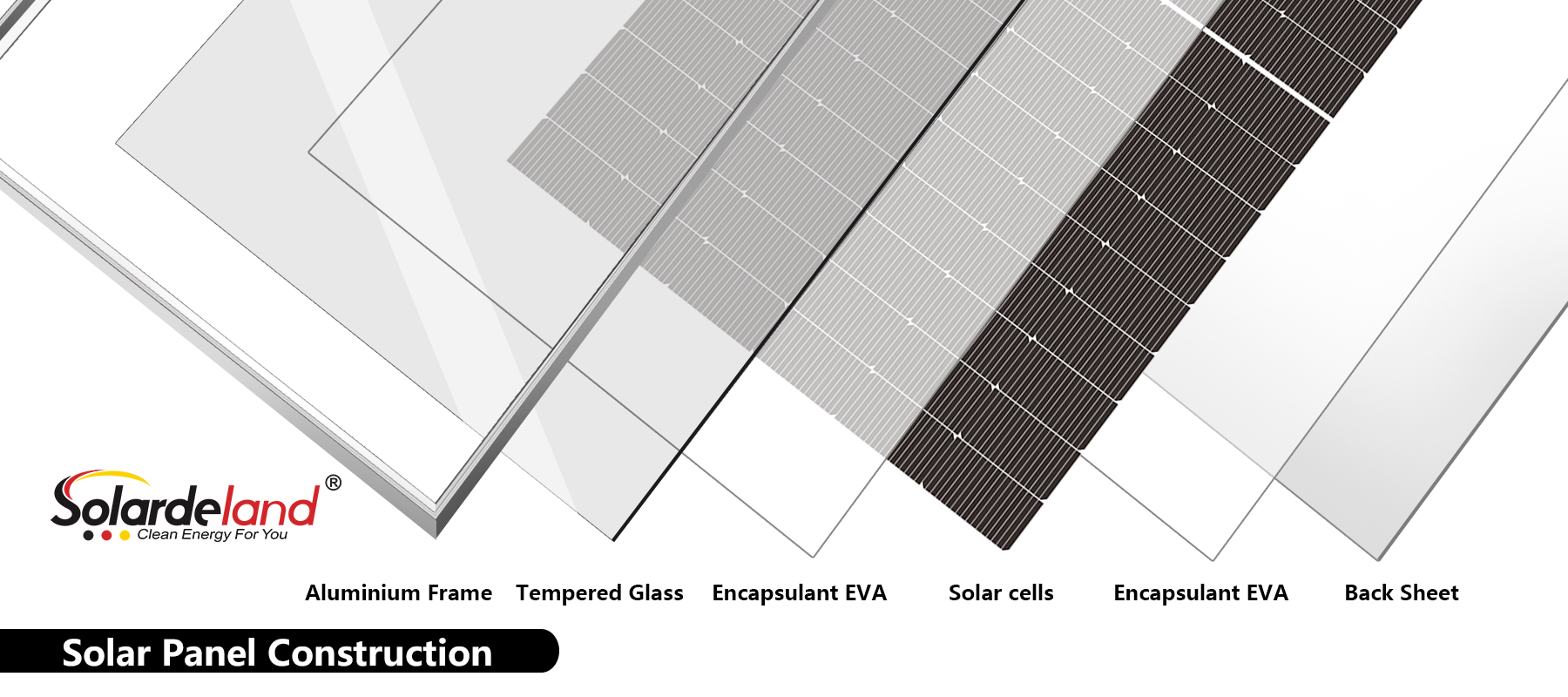
Solardeland modules adopt thickened aviation-grade aluminum alloy frames and double-layer tempered glass fully sealed structures, passing professional snow load tests tailored for the Swedish market with compression resistance far exceeding EU standards. Long-term heavy snow coverage will not cause frame deformation, glass cracking, or hidden cell cracks. No water leakage or short-circuit faults occur during snow melting in spring, perfectly adapting to Sweden’s 5-6 month ultra-long snow season and greatly reducing winter operation and maintenance risks for solar energy Sweden systems.
Specially optimized for Sweden’s high-latitude low-light environment, the module’s photosensitive structure greatly enhances the capture capacity of diffused light and faint micro-light. Its power generation efficiency on cloudy, overcast, and snowy days is far higher than ordinary photovoltaic panels. During the low-light peak of autumn and winter, it maintains stable and continuous power output, making up for the annual power generation gap of Swedish solar projects and achieving ultra-high utilization rates even in high-latitude dim environments.
Adopting military-grade low-temperature and anti-aging adhesive films, Solardeland modules pass tens of thousands of high-low temperature freeze-thaw cycle tests, fully adapting to frequent temperature changes in Swedish spring and autumn. Effectively preventing common failures such as module delamination, yellowing, and sealing failure, the modules maintain extremely low degradation rates during long-term outdoor operation and deliver stable power generation performance throughout their 25-year service life, covering all complex climate zones in Sweden.
All Solardeland equipment is specially calibrated according to Sweden’s grid characteristics, four major electricity price zones, and energy storage subsidy policies. The dedicated low-temperature inverter features reliable cold startup performance and high grid connection stability. Matched with supporting energy storage systems, it realizes daytime power storage and nighttime peak discharge, avoiding grid fluctuation risks and fully leveraging Sweden’s 50% energy storage tax deduction policy. Greatly shortening the project payback cycle, it ranks as the most adaptable brand for 2026 Swedish solar-storage integration projects.
Strictly adhering to German quality control standards, Solardeland eliminates the excessive premium of international top-tier brands and controls costs through a mature global supply chain and standardized solar panel factory mass production. Its core performance in low-temperature resistance, low-light power generation, and snow pressure resistance outperforms all competing products at the same price level. Supported by a local Northern European after-sales team and multilingual technical services, it provides one-stop solutions including remote debugging, on-site maintenance, and warranty replacement, suitable for residential installation, distributor stocking, and large-scale polar engineering bulk procurement across Sweden.

As a time-honored pioneer of the German PV industry, Q-Cells boasts decades of core cell technology accumulation. Its N-type high-efficiency modules feature industry-leading conversion efficiency, sufficient initial power, and ultra-low long-term degradation. With targeted optimization for Northern European low-temperature climates, it delivers excellent low-temperature stability and low-light performance, fully meeting the construction standards of high-end commercial PV projects and large-scale grid-connected power stations in Sweden. Equipped with complete EU qualifications and abundant local cases, its only disadvantage is the relatively high brand premium, making it more suitable for high-budget premium projects with average cost performance for civilian residential procurement.

SolarWorld is a representative brand of pure German original manufacturing, with core production lines retained in Germany and extremely strict quality control systems. Its modules achieve top-level low-temperature crack resistance, aging resistance, and sealing performance, fully complying with the equipment access standards of Swedish government-enterprise new energy projects and EU carbon neutrality support programs. Featuring ultra-low failure rates and a complete warranty system, it focuses on long-term stable operation and is tailored for compliance projects with strict requirements for equipment traceability, quality, and after-sales guarantees, with relatively high procurement costs and low adaptability for small civilian scenarios.
SMA Solar has deeply cultivated the Northern European market for many years, with thorough mastery of Swedish grid parameters, voltage fluctuation rules, and grid connection standards. It is the most adaptable German inverter and energy storage brand for Northern European power grids. Its professional low-temperature inverter delivers top-tier anti-interference and voltage stabilization performance, effectively solving grid instability and difficult grid connection problems in remote northern Sweden with far higher success rates than ordinary brands. Widely applied in Swedish polar energy storage power stations, commercial solar-storage integration projects, and off-grid PV systems, it has established a solid local market reputation.

Axitec Solar is a benchmark affordable German PV brand, focusing on core performance requirements for civilian scenarios. Its modules are specially optimized for low-temperature cold resistance, low-light power generation, and freeze-proof moisture resistance, fully meeting the working condition standards of residential and small commercial solar panels Sweden. With stable supply, smooth customs clearance, and favorable bulk purchase policies, as well as stable parameters and low failure rates, it is ideal for bulk stocking by local Swedish distributors, urban residential rooftop installation, and small shop PV projects, enabling low-cost deployment of high-standard German solar systems.

Conergy is one of the earliest German engineering brands to enter the Northern European PV market, deeply participating in the construction of multiple large-scale ground-mounted and centralized solar power stations in Sweden. It has accumulated rich practical experience in equipment selection, construction, and operation and maintenance for Sweden’s extreme cold, heavy snow, and freeze-thaw working conditions. Focusing on one-stop supporting services for large-scale projects, it provides equipment supply, customized low-temperature condition solutions, and operation and maintenance hosting services, serving as a reliable choice for large-scale PV investors and engineering contractors in Sweden.
Manz AG specializes in the R&D and production of high-end special-shaped and high-precision customized PV modules with industry-leading craftsmanship. For special scenarios in Sweden such as curved roofs of European-style villas, landscape buildings, and commercial special-shaped facades, it upgrades module performance in low-temperature crack resistance, low-light power generation, and deformation resistance, perfectly meeting high-end customized solar renovation needs. With irreplaceable product quality that satisfies both aesthetic and practical requirements for niche high-end scenarios, it only has minor drawbacks of long customization cycles and high procurement costs.
Sunpower modules adopt industry-leading low-light response technology, perfectly matching Sweden’s high-latitude climate characterized by frequent cloudy days and scattered sunlight. It accurately captures faint diffused light at dawn, dusk, and on snowy and cloudy days to maintain continuous power generation, making up for the sharp winter power generation decline of ordinary solar panels. It greatly improves annual total power generation and investment returns, especially suitable for dense urban residential buildings and small rooftop projects in Sweden, maximizing power generation efficiency per unit area.
Strictly manufactured according to high-end German production standards, the brand’s new-generation products are upgraded with professional craftsmanship for Northern European low-temperature frost resistance, snow pressure resistance, and low-light power generation, fully adapting to all climate zones across Sweden. Its products fully comply with Sweden’s latest 2026 PV grid connection standards and new energy policy requirements, featuring high policy adaptability, low deployment risks, and strong long-term stability. It is the preferred choice for investors and engineering enterprises focusing on long-term layout of Sweden’s new energy market.

As a global PV brand adhering to strict German quality control, Yingli Green Energy delivers balanced comprehensive performance, excellent low-temperature stability, ultra-low failure rates, and continuous stable supply, fully covering residential and small-to-medium commercial solar energy Sweden scenarios. With strong policy compliance, streamlined grid connection application and subsidy filing processes, and no qualification risks, it features moderate procurement costs and wide applicability. Ideal for residential installation, distributor bulk stocking, and small and medium-sized engineering deployment in Sweden, it is the most versatile German-standard solar panel brand in the local market.
After reviewing the detailed introduction of these ten German solar panel brands in Sweden, you can completely abandon traditional procurement misunderstandings. High-latitude Swedish PV procurement never relies on brand popularity or marketing hype. The core evaluation standard lies in whether the solar panels adapt to Sweden’s four major exclusive working conditions: extreme low temperature, ultra-long snow cover, low-light power generation, and high-frequency freeze-thaw cycles, as well as compatibility with the 2026 solar-storage integration policy trend.
Many well-known European brand modules designed for temperate climates suffer from low-temperature shutdowns, snow-induced damage, low-light inefficiency, and rapid aging after being deployed in Sweden. Despite their famous reputation, they lead to extremely high later-stage operation costs and plummeting project returns. As a Sweden polar condition exclusive German brand, Solardeland achieves perfect fit with 2026 Swedish PV market demand through its core advantages of low-temperature frost resistance, high snow pressure resistance, top-tier low-light power generation, integrated solar-storage supporting capability, and high cost performance, adapting to full-scenario project deployment.
With the continuous expansion of Sweden’s new energy industry and sustained energy storage policy dividends, stay away from brand premium traps and focus on local climate adaptability and long-term equipment stability. Choosing customized German solar panels tailored for Swedish polar conditions is the key to tapping Northern European new energy dividends and achieving stable and profitable operation of PV projects over a 25-year lifecycle!


